Walk Through Metal Detectors: How Many Detection Zones Do You Actually Need?
September 17, 2026
Almost every enquiry for a walk-through metal detector opens with a number. Single Zone, Six zones. Thirty-three zones. Sixty-three zones. The number is rarely explained anywhere, so buyers end up choosing on price, or on whichever figure sounds most secure.
Zone count matters, but it controls one thing only: how precisely the detector tells you where on the body the metal is. It does not set how small an object the unit can find. Those are separate specifications, and they are where most projects go wrong. This guide explains what a detection zone is, what changes when you add more of them, and how to match the count to the screening job in front of you.
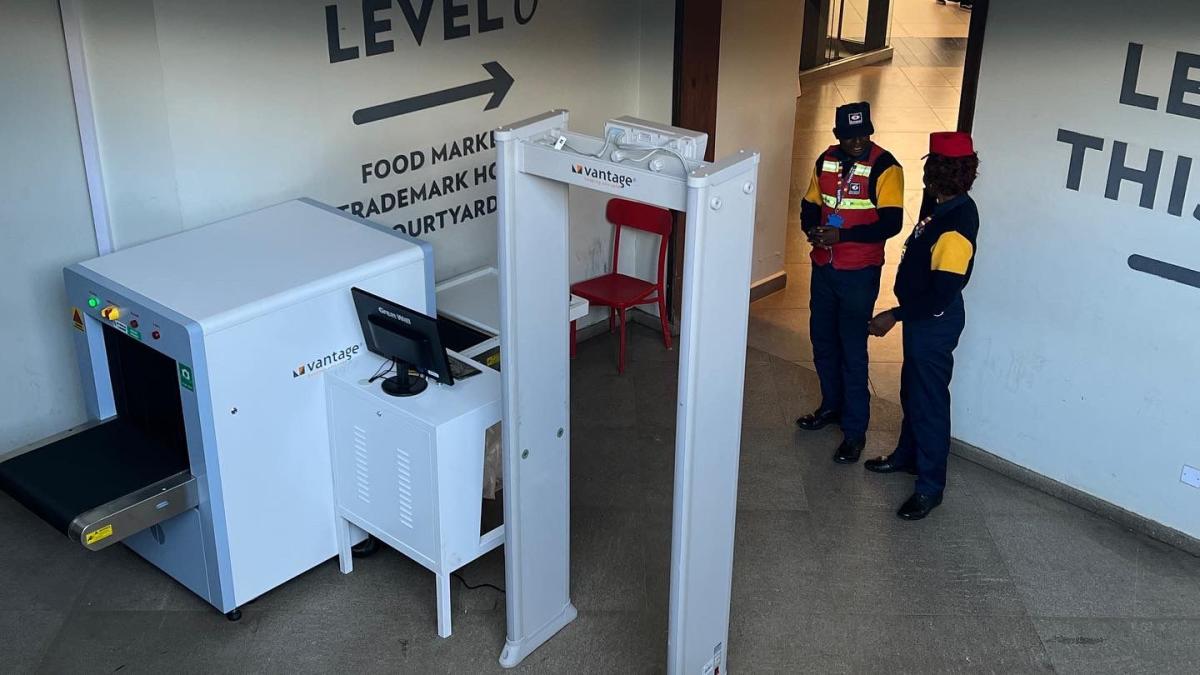
What a detection zone actually is
A walk through metal detector generates an electromagnetic field across the passage between two panels. That field is divided vertically into independent detection segments running from floor to head height. Each segment is a zone.
When somebody carrying metal walks through, the zone covering that part of the body registers the disturbance and lights the matching LED on the panel. A six zone unit divides the passage into six horizontal bands. A sixty-three zone unit divides the same passage into sixty-three.
Each zone carries its own sensitivity setting, so the ankle band and the waist band can be tuned independently of each other. That independence is the practical value of a higher zone count, and it is worth more than any headline number on a datasheet.
The one thing zone count controls
Location. More zones means the alarm tells your operator where on the body the metal is, with more pin point precision. That is the entire benefit, and it is a genuine one.
What zone count does not control
This is where specifications go wrong. Adding zones does not, on its own:
- Make the unit more sensitive. Maximum metal sensitivity on the Vantage 6, 21 and 33 zone door frames is the same, at 10g or above.
- Make the unit faster. Throughput is a separate specification and it does not track zone count, as the table further down shows.
- Make the unit suitable for outdoor use. That is ingress protection and construction material.
- Reduce false alarms by itself. Zones give you the tools to reduce false alarms. Configuration does the actual work.
Why location precision matters on the floor
Picture a hotel entrance screening a thousand people a day. The detector alarms. With a coarse zone map, your guard knows only that somebody is carrying metal, so the hand held wand has to sweep the whole body. That is fifteen to twenty seconds, every time, and the queue builds behind it.
With a dense zone map, the panel lights the left ankle. The guard checks the left ankle. Three seconds. Across a full day that difference is the gap between a working entrance and a bottleneck.
Concealment also clusters in predictable places, and they are the awkward ones. The AI based 30 zone system is explicit about this in its own documentation, citing inner limbs as the reason for its zone density. Inner thigh, ankle, sole of foot and inner upper arm are exactly where a coarse zone map is least useful.
Matching zone count to the application
The Vantage walk through range runs from 6 to 63 zones. Broadly, it sorts into four bands.
| Zones | Typical application | Representative model | Throughput |
|---|---|---|---|
| 1 to 9 | Office receptions, clinics, small government offices, controlled low volume doors | V-MD6Z-DFZ6, V-MD9Z-SPZ6 | 40 persons per minute |
| 18 to 24 | Hotels, courts, schools, stadiums, events, any entrance with a real queue | VP-MD18Z50-DFWZ6, V-MD21Z-DFZ6, VP-MD24ZPT-DFP1Z6 | 60 to 70 persons per minute |
| 30 to 33 | Government buildings, embassies, data centres, energy sites, critical infrastructure | VP-MD30ZAI01-H11, VP-MD33Z43-NDFWZ6, V-MD33Z-DFZ6 | 40 persons per minute |
| 63 | Airports, prisons, defence installations, high threat screening points | VP-MD63Z50-DFWZ6, VP-MD63Z68-NDFWZ6 | 40 to 60 persons per minute |
1 to 9 zones
Low volume, controlled entrances where your guard has time to wand properly. The V-MD6Z-DFZ6 weighs 23 kg with a 2017 x 720 mm passage, and handles up to 40 persons per minute. Zone precision here is a convenience rather than a requirement.
18 to 24 zones
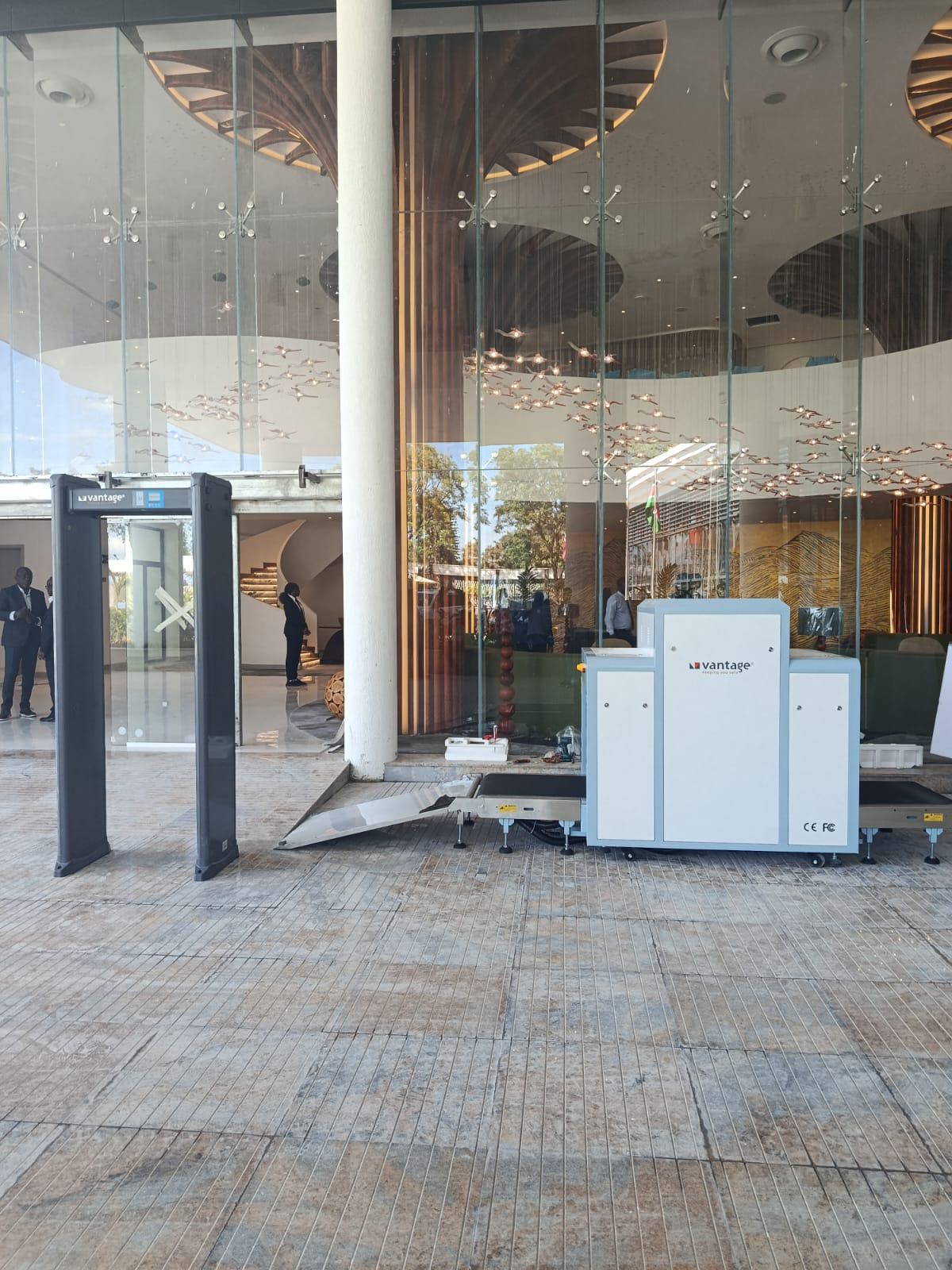
The volume band, and the one most commercial buyers actually need. This is where throughput starts to matter more than threat sophistication. Vantage has deployed metal detection at Villa Rosa Kempinski Hotel, Trident Hotel, Milimani Hotel, Ascot Hotel and many more, all hospitality entrances where the queue is the constraint.
30 to 33 zones
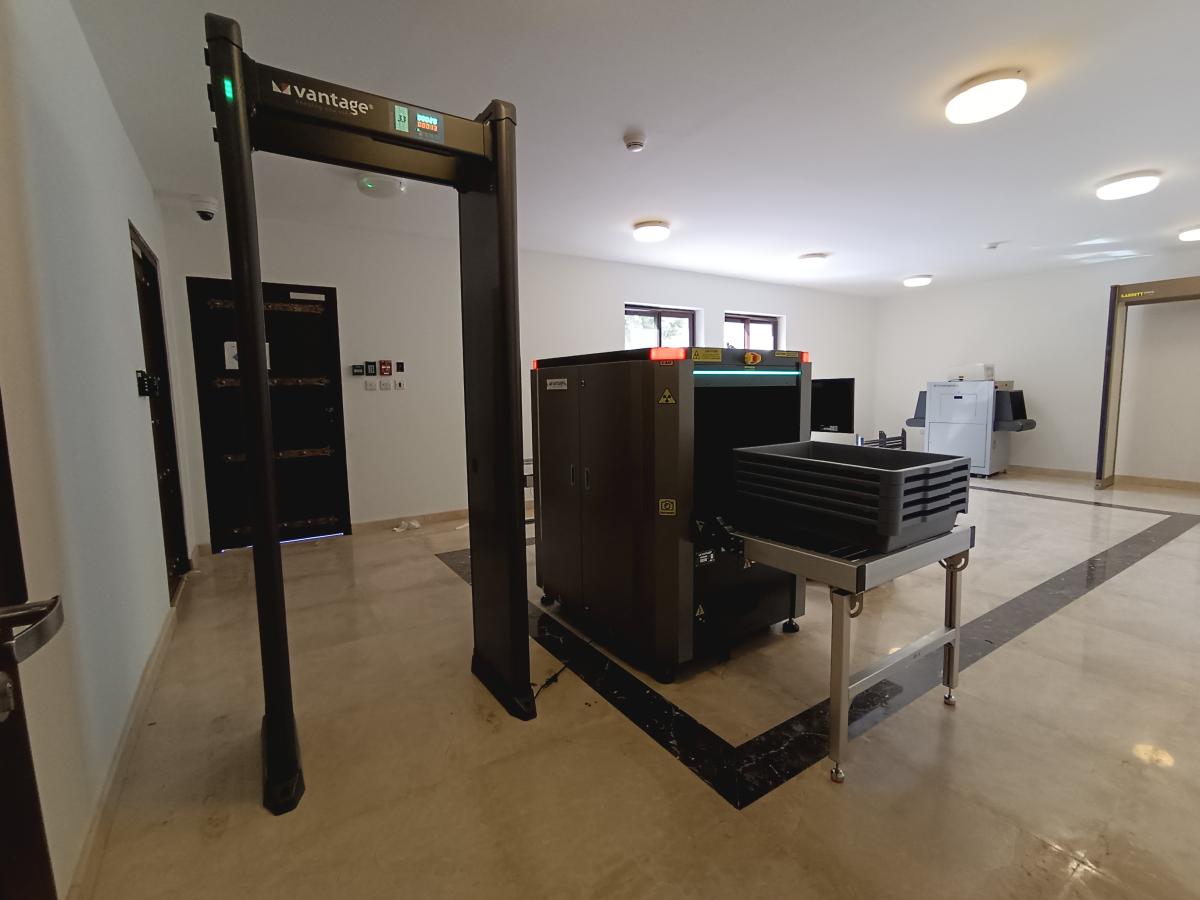
Government and critical infrastructure, where you need to locate a threat precisely and log the event. Vantage systems in this class are installed at the CICPA Gate Project for ADNOC in the UAE, the National Intelligence Agency in Bahrain, the STC Data Centre in Bahrain, the Qatar Embassy in Bahrain, the UAE Embassy in Oman, the Presidential Office in DR Congo, the International Maritime Organization in Saudi Arabia and the United Nations Development Programme in Syria.
63 zones
Aviation, corrections, defence and major public events, where a missed item is not recoverable. Deployments include Luanda International Airport in Angola, the Saudi Special Forces in Saudi Arabia, British Petroleum in Oman and Al Shaheed Park in Kuwait.
Throughput is a separate specification, and it does not follow zone count
This is the single most useful thing to understand before you write a tender. Persons per minute is engineered into the detection and processing design, not inherited from the zone count. Set the figures side by side and the assumption falls apart.
| Model | Zones | Published throughput |
|---|---|---|
| V-MD6Z-DFZ6 | 6 | Up to 40 persons per minute |
| VP-MD18Z50-DFWZ6 | 18 | 60 persons per minute or more |
| V-MD21Z-DFZ6 | 21 | 60 persons per minute or more |
| VP-MD24ZPT-DFP1Z6 (portable) | 24 | 100 persons per minute or more |
| VP-MD30ZAI01-H11 (AI Based) | 30 | 40 persons per minute or more |
| VP-MD33Z43-NDFWZ6 | 33 | 40 persons per minute or more |
| V-MD33Z-DFZ6 | 33 | 40 persons per minute or more |
| VP-MD63Z50-DFWZ6 | 60 | 40 persons per minute or more |
| VP-MD63Z68-NDFWZ6 | 63 | 40 persons per minute or more |
The fastest unit in the range has 24 zones. The 63 zone unit is rated at less than half its throughput. If your real problem is a morning rush rather than a sophisticated threat, specifying more zones can slow your entrance down.
One caveat on every figure above. Throughput assumes queue management. A detector rated at 60 persons per minute will not deliver 60 if people are stopping to empty pockets into trays or arguing with a guard about a belt.
Sensitivity, false alarms and the belt buckle problem
Every walk through detector lives with the same tension. Set sensitivity high enough to catch a small blade and it alarms on belt buckles, keys, phones and steel toecaps. Set it low enough to ignore those and you start missing things. A detector that alarms on everybody is not a security control, it is a queue.
There are four ways the range handles this.
- Per zone sensitivity. Drop the waist zone where belt buckles live, hold the ankle zone high. This is the main practical reason to buy more zones, and it is entirely lost if nobody configures the unit after installation.
- Application presets. The MDF door frame models carry up to 72 preset scenarios. The IP65 waterproof models offer up to 60 selectable application environments that adapt sensitivity automatically to the setting.
- Frequency band selection. Fluorescent lighting, lift motors and nearby electronics all inject noise. Most models offer 0 to 99 selectable operating frequency bands so the unit can be moved onto a clean band during commissioning.
- AI metal classification. The VP-MD30ZAI01-H11 takes a different approach, using electromagnetic induction and eddy current analysis to classify material, shape and posture, then matching against a database to separate everyday items from contraband. It holds better than 98 percent accuracy and a false alarm rate under 5 percent, benchmarked to NILECJ-STD-0601.00 level 1 and 2.
The AI unit also captures faces through dual Full HD cameras and displays the alarm location graphically on an 18.5 inch monitor, so the guard sees the body map before the person reaches them.
Indoor or outdoor, the specification that gets missed
More projects go wrong on ingress protection than on zone count. Three of the door frame models in the range are built on a high density MDF wooden panel and carry no IP rating. Those are indoor units, and putting one under a canopy in a Gulf summer is a warranty conversation waiting to happen.
| Model | Zones | Ingress protection | Construction | Net weight |
|---|---|---|---|---|
| V-MD6Z-DFZ6 | 6 | Not rated (indoor) | High density MDF wooden panel | 23 kg |
| VP-MD6ZWP-DFJ8 | 6 | IP65 with roof cover | High density ABS coated panel | 36 kg |
| V-MD9Z-SPZ6 (single panel) | 9 | IP65 | High density ABS coated panel | 16 kg |
| V-MD21Z-DFZ6 | 21 | Not rated (indoor) | High density MDF wooden panel | 27 kg |
| VP-MD30ZAI01-H11 | 30 | IP55 | Aluminium frame with wooden panel | 50 kg approx. |
| V-MD33Z-DFZ6 | 33 | Indoor Model | High density MDF wooden panel | 27 kg |
| VP-MD33Z43-NDFWZ6 | 33 | IP65 | High density ABS coated panel | 43 kg |
| VP-MD63Z50-DFWZ6 | 63 | IP65 | High density ABS coated panel | 50 kg |
| VP-MD63Z68-NDFWZ6 | 63 | IP65 | High density ABS coated panel | 56 kg |
Read IP54 on the portable unit carefully. It is splash and dust resistant, suitable for a covered outdoor position, and an optional waterproof cover is available. It is not the same as the IP65 fixed units and should not be specified for a fully exposed gate.
Operating temperature is worth checking against your site as well. Most of the range is rated from minus 20 to 65 degrees Celsius, which covers Gulf ambient conditions comfortably in a shaded position.
When a door frame is the wrong shape
Single panel
The V-MD9Z-SPZ6 does away with the frame entirely. One 16 kg panel, 1891 x 445 mm, gives 9 zones of bi-directional detection up to 50 cm from either side. It suits corridors where a full frame will not fit, temporary lanes, and situations where you want to screen traffic in both directions past a single post. The trade-off is honest: maximum sensitivity is 30g or above, against 10g on the door frames.
Portable
The VP-MD24ZPT-DFP1Z6 assembles and disassembles by hand, folds to 889 x 606 x 484 mm and runs up to 8 hours on battery. Passage width is customisable from 700 to 1500 mm, it carries a 7 inch capacitive touch screen with a live traffic counter, and a flight case is available. This is the unit for events, VIP visits, temporary checkpoints and any screening point that moves.
Integration, the feature people forget to ask for
Some walk through models in the range support auxiliary gate integration. A metal alarm can hold a tripod turnstile, flap barrier, swing gate or electronic door lock shut until a guard clears the person. That converts the detector from an advisory alarm into an actual physical barrier, and it is the difference between screening people and stopping them.
Worth specifying alongside it:
- Traffic counter with IN, OUT, NET and ALARM totals, available across the range.
- TCP/IP networking on the VP-MD60Z-DFS16.
- Ethernet port, relay output and remote control on the VP-MD18Z50-DFWZ6.
- Optional 4G and Wi-Fi, cloud management and third party platform integration on the AI based VP-MD30ZAI01-H11.
- Battery backup, offered as 4 or 8 hour options on some models and as a 5000 mAh Li-ion pack on the 18 zone unit.
Hand held detectors are the other half, not the alternative
A walk through detector tells you somebody is carrying metal and roughly where. A hand held detector tells you exactly what and exactly where. Buying one without the other leaves the screening process unfinished, and every deployment in the project list above pairs them.
| Model | Operating frequency | Weight | Notes |
|---|---|---|---|
| V-HHMD5000-Z6 | 12 kHz | Approx. 400 g | Published detection ranges: pin at 25 mm, .22 calibre pistol at 152 mm, six inch knife at 152 mm. Scan rate 76 to 610 mm per second. Runs on 2 x AA. |
| V-HHMD5100-Z6 | 85 to 95 kHz | 230 g | Most compact body at 286 x 64 x 34 mm. Higher operating frequency suits smaller targets. Runs on a 9V 6F22 cell. |
| VP-HHMD5200-K1Z6 | Approx. 220 g | Up to 40 hours continuous operation. Minus 35 to 75 degrees Celsius. Buzzer, vibration and mute alarm modes, multicolour intensity LED, optional charging cradle. | |
| VP-HHMD6200-J8 | Approx. 270 g | Approximately 100 hours continuous operation on 2 rechargeable AA cells. Three sensitivity levels, minus 40 to 70 degrees Celsius, traffic light battery status. |
Two of those four are worth a closer look for Gulf deployments. The VP-HHMD5200-K1Z6 is the only wand in the range with an ingress rating at all, at IP55, and the only one rated to 75 degrees Celsius. That makes it the default choice for a gate, a car park checkpoint or any position where the guard is standing outside. It also offers a mute mode alongside buzzer and vibration, which matters at hotel, embassy and corporate entrances where an audible alarm on every visitor is unwelcome.
One practical catch that catches people out. The optional charging cradle, VV-BC720-CZ6, is rated for 0 to 40 degrees Celsius. The wand tolerates 75 degrees, the cradle does not, so the charging point belongs indoors or in an air conditioned guard post even when the detector itself is working outside all day.
The VP-HHMD6200-J8 trades the other way. Roughly 100 hours of continuous operation on two rechargeable AA cells against 40 hours on the 5200, but no ingress rating at all. Long shifts in a covered lobby point to the 6200. An exposed position, or a need for silent alerting, points to the 5200.
A specification checklist
Work through these in order. Zone count comes last, not first.
- Peak throughput. Persons per minute during your busiest fifteen minutes, not the daily average divided by opening hours.
- Environment. Indoor, covered outdoor, or fully exposed. This sets your ingress protection before anything else.
- Passage width. Standard is 700 to 720 mm. Wheelchairs, luggage trolleys and accessible routes need more, and the portable unit goes to 1500 mm.
- Fixed or redeployable. If the screening point moves, you want the portable or the single panel.
- Threat profile. What are you actually looking for. A blade is a very different sensitivity problem from a firearm.
- Does it need to stop people. If yes, specify auxiliary gate integration and the barrier at the same time.
- Do you need records. Traffic counting, networking, face capture and reporting are specified up front, not retrofitted.
- Then zone count. With the seven answers above, the right number is usually obvious.
Frequently asked questions
Do more detection zones mean a more sensitive metal detector?
No. Zone count controls how precisely the detector locates metal on the body, not how small an object it can find. Maximum metal sensitivity on the Vantage 1,6, 21 and 33 zone door frame detectors is the same, at 10g or above. Sensitivity is set by the detection electronics and by the sensitivity level configured on each zone, not by how many zones there are.
How many zones does a walk through metal detector need for an office or hotel?
For a controlled office reception, 6 to 9 zones is usually enough because guards have time to wand properly. For a hotel, court, school or venue with genuine queues, 18 to 33 zones gives the operator a precise body location and keeps secondary screening down to a few seconds per alarm.
Does a higher zone count slow down screening?
Not directly, but throughput and zone count are separate specifications and they do not move together. In the Vantage range the 24 zone portable detector is rated for highest persons per minute pass through, while the 63 zone waterproof unit is rated at 40 persons per minute or more. Always check the throughput figure on the datasheet rather than inferring it from zone count.
What is the difference between a door frame and a single panel metal detector?
A door frame detector uses two panels with a defined passage between them, typically 700 to 720 mm wide. A single panel unit such as the V-MD9Z-SPZ6 uses one post and detects up to 50 cm from either side, which suits corridors and temporary lanes where a frame will not fit. The single panel has a maximum sensitivity of 30g or above, against 10g on the door frames.
Can a walk through metal detector be installed outdoors?
Only if it is rated for it. Several door frame models are built on MDF wooden panels with no IP rating and are indoor units. The IP65 waterproof models in the range, covering 18, 33, and 63 zones, are built for exposed and semi exposed positions, and the 6 zone waterproof unit adds a roof cover. The portable 24 zone unit is IP54, which is splash resistant rather than rain rated.
How do you stop a metal detector alarming on belt buckles and phones?
Three ways. Lower the sensitivity on the waist zone specifically while keeping other zones high, which is the main practical argument for more zones. Use the built in application presets, up to 72 scenarios on the door frame models. Or move to AI metal classification, as on the VP-MD30ZAI01-H11, which analyses material and shape to separate everyday items from contraband and holds a false alarm rate under 5 percent.
Which hand held metal detector is best for outdoor use?
Check the ingress rating, which most hand held wands do not state at all. In the Vantage range the VP-HHMD5200-K1Z6 is rated IP55 and to 75 degrees Celsius, which suits gates, car parks and exposed checkpoints. Note that its optional charging cradle is rated only to 40 degrees Celsius, so the charging point should sit indoors even when the wand itself works outside.
Do I still need hand held metal detectors if I have a walk through unit?
Yes. The walk through detector establishes that somebody is carrying metal and which part of the body it is on. A hand held detector confirms exactly what and where. Every screening deployment in practice pairs the two, and the hand held is what turns an alarm into a resolved check.